Ahmed Omar Mahmoud1, Hosam Elsayed Abd-Elzaher2, Ramy Mostafa Abd El Gawad1, Mahmoud A. M. H. Eisa1, Mostafa Hassanien Hassanien Bakr1
 ORCID
ORCID
Recibido:
Aceptado: 2026-06-05
©2026 El(los) Autor(es) – Esta publicación es Órgano oficial de la Sociedad de Anestesiología de Chile
Revista Chilena de Anestesia Vol. 55 Núm. 5 | https://doi.org/10.25237/revchilanestv55n5-22
PDF
Eficacia comparativa entre el bloqueo del canal adductor proximal versus distal guiado por ultrasonido en artroscopia de rodilla: Manejo del dolor posoperatorio
Abstract
Background: Postoperative pain control after knee arthroscopy improves recovery and alleviates opioid-related complications. The adductor canal block is considered a promising method for providing effective analgesia with minimal motor impairment, but the most effective site for injection has yet to be determined. Aim: This randomized controlled trial evaluated the effectiveness of ultrasound-guided proximal versus distal ACB compared with standard care without nerve block for pain management after knee arthroscopy. Patients and Methods: Seventy-five patients undergoing elective knee arthroscopy were randomly divided into three groups, each consisting of 25 individuals: Proximal ACB, Distal ACB, and Control. The ACB groups received 20 mL of 0.375% bupivacaine administered at their respective locations under ultrasound guidance. Assessments were conducted over 24 hours to evaluate postoperative pain intensity (VAS scores), opioid use (tramadol), motor function (Bromage scale), and recovery indicators. Statistical analysis was conducted using ANOVA and Chi-square tests, with a threshold of P < 0.05 for significance. Results: The cumulative tramadol consumption was the lowest in the Proximal ACB group, with a consumption of 95.2 ± 18.6 milligrams, followed by the Distal ACB group at 108.4 ± 19.5 milligrams and the Control group at 165.8 ± 25.4 milligrams, with a highly significant difference of P < 0.001. Pain scores based on the Visual Analogue Scale were significantly lower for both ACB groups compared with the Control group, with a highly significant difference of P < 0.001, and the Proximal ACB group demonstrated the best pain relief. Motor function was maintained in all groups, with a Bromage score of 0 observed in 100% of patients at 24 hours. The proximal ACB group exhibited a significantly longer delay in initial pain medication requests, with a mean time of 385 ± 112 minutes, compared with wind distal ACB (298 ± 95 minutes) and the Control group (145 ± 65 minutes, P < 0.001). Both groups had higher patient satisfaction ratings and experienced fewer opioid-related side effects, such as nausea and vomiting. Conclusion: Proximal ultrasound-guided ACB was associated with better postoperative pain relief, lower opioid usage, and faster recovery than distal ACB and typical treatment protocols. The motor-sparing characteristics of this technique make it a valuable component in multimodal pain management strategies for knee arthroscopic procedures.
Resumen
Background: Postoperative pain control after knee arthroscopy improves recovery and alleviates opioid-related complications. The adductor canal block is considered a promising method for providing effective analgesia with minimal motor impairment, but the most effective site for injection has yet to be determined. Aim: This randomized controlled trial evaluated the effectiveness of ultrasound-guided proximal versus distal ACB compared with standard care without nerve block for pain management after knee arthroscopy. Patients and Methods: Seventy-five patients undergoing elective knee arthroscopy were randomly divided into three groups, each consisting of 25 individuals: Proximal ACB, Distal ACB, and Control. The ACB groups received 20 mL of 0.375% bupivacaine administered at their respective locations under ultrasound guidance. Assessments were conducted over 24 hours to evaluate postoperative pain intensity (VAS scores), opioid use (tramadol), motor function (Bromage scale), and recovery indicators. Statistical analysis was conducted using ANOVA and Chi-square tests, with a threshold of P < 0.05 for significance. Results: The cumulative tramadol consumption was the lowest in the Proximal ACB group, with a consumption of 95.2 ± 18.6 milligrams, followed by the Distal ACB group at 108.4 ± 19.5 milligrams and the Control group at 165.8 ± 25.4 milligrams, with a highly significant difference of P < 0.001. Pain scores based on the Visual Analogue Scale were significantly lower for both ACB groups compared with the Control group, with a highly significant difference of P < 0.001, and the Proximal ACB group demonstrated the best pain relief. Motor function was maintained in all groups, with a Bromage score of 0 observed in 100% of patients at 24 hours. The proximal ACB group exhibited a significantly longer delay in initial pain medication requests, with a mean time of 385 ± 112 minutes, compared with wind distal ACB (298 ± 95 minutes) and the Control group (145 ± 65 minutes, P < 0.001). Both groups had higher patient satisfaction ratings and experienced fewer opioid-related side effects, such as nausea and vomiting. Conclusion: Proximal ultrasound-guided ACB was associated with better postoperative pain relief, lower opioid usage, and faster recovery than distal ACB and typical treatment protocols. The motor-sparing characteristics of this technique make it a valuable component in multimodal pain management strategies for knee arthroscopic procedures.
Introduction
Knee arthroscopy, a frequent minimally invasive orthopedic surgery, improves healing. Despite being minimally invasive, many patients feel severe postoperative pain, which can slow recovery and lower satisfaction[1],[2]. Femoral nerve block (FNB) has been the gold standard for postoperative pain management, although it decreases quadriceps strength, delaying movement and increasing the risk of falls. Thus, adductor canal blocks (ACBs) have been popular because they give excellent analgesia while retaining quadriceps function[3],[4]. The adductor canal contains the saphenous nerve, a sensory branch of the femoral nerve. Blocking this nerve within the adductor canal provides knee analgesia without significantly affecting motor function[5]. Clinical studies have demonstrated that ultrasound-guided ACB effectively reduces postoperative pain and opioid consumption[6]-[8]. Proximal ACB, targeting the adductor canal near the junction of the sartorius and adductor longus muscles, may offer superior analgesia compared to distal ACB, performed closer to the adductor hiatus. However, the extent of this difference and its clinical significance are still under investigation[6]. There is no consensus on whether proximal or distal ACB offers the best balance of pain relief, opioid sparing, and preservation of motor function. Most studies have compared ACB to FNB without distinguishing between different block sites, and there is limited data comparing these approaches to standard care without a nerve block (6, 7). This study aims to address these gaps by comparing the efficacy and safety of proximal versus distal ACB, with a control group receiving standard pain management.
< 0,001, y el grupo ACB Proximal demostró el mejor alivio del dolor. La función motora se mantuvo en todos los grupos, con una puntuación de Bromage de 0 observada en el 100% de los pacientes a las 24 h. El grupo de ACB proximal mostró un retraso significativamente mayor en las solicitudes iniciales de medicación para el dolor, con un tiempo medio de 385 ± 112 minutos, en comparación con el grupo de ACB distal (298 ± 95 minutos) y el grupo de Control (145 ± 65 minutos, P < 0,001). Ambos grupos tuvieron calificaciones de satisfacción del paciente más altas y experimentaron menos efectos secundarios relacionados con los opioides, como náuseas y vómitos. Conclusión: El ACB proximal guiado por ultrasonido se asoció con un mejor alivio del dolor posoperatorio, un menor uso de opioides y una recuperación más rápida que el ACB distal y los protocolos de tratamiento típicos. Las características de preservación motora de esta técnica la convierten en un componente valioso en las
Study Design
This randomized controlled trial (RCT) was conducted across two centers: Assiut University Hospital and New Valley University Hospital, over six months. Ethical approval was obtained from the Institutional Review Board (IRB) of Assiut University (Approval No. 04-2024-300520) and the Medical and Nursing Ethics Committee (MNVREC) of New Valley University (Approval No. 20240930010). Written informed consent was obtained from all participants prior to enrollment. The flowchart of this trial is shown in Figure 1. A total of 75 patients undergoing elective knee arthroscopy were randomized into three equal groups of 25 each:
1. Proximal ACB Group (n = 25): Patients received a proximal adductor canal block.
2. Distal ACB Group (n = 25): Patients received a distal adductor canal block.
3. Control Group (n = 25): Patients did not receive a nerve block but were managed with standard postoperative analgesia.
Inclusion criteria:
- Patients aged 18-80 years.
- ASA classification I-III.
- Elective knee arthroscopy.
Exclusion criteria:
- Chronic opioid use or chronic/neuropathic pain.
- Known allergies to local anesthetics.
- Inability or unwillingness to provide consent.
- Significant cognitive impairment or psychiatric conditions.
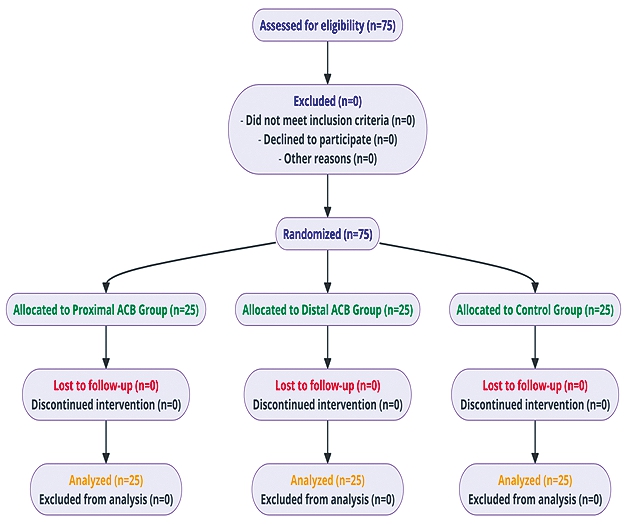
Figure 1. Flow chart of the study.
Randomization and blinding
Patients were randomized in a 1:1:1 ratio using a computer-generated randomization sequence concealed in sealed envelopes. The anesthesiologist performing the blocks was unblinded, while patients, nurses, and outcome assessors were blinded to group assignments.
General anesthesia management
A standardized general anesthesia protocol was used for all patients. Monitoring included pulse oximetry, electrocardiography, and non-invasive blood pressure. Anesthesia induction involved intravenous (IV) propofol (2-3 mg/kg), fentanyl (1 μg/ kg), and atracurium bromide (0.3 mg/kg). Airway management was achieved using a laryngeal mask airway, and anesthesia was maintained with sevoflurane (2%) in a 50:50 oxygen-air mixture. All patients received intraoperative dexketoprofen (50 mg IV) and granisetron (1 mg IV) to prevent postoperative nausea and vomiting.
Adductor canal block technique
Blocks were performed after induction of general anesthesia under sterile conditions using a high-frequency linear array ultrasound (Sonosite M-Turbo).
1. Proximal ACB: The block site was located at the intersection of the medial borders of the sartorius and adductor longus muscles. Figure 1. Flow chart of the study.
2. Distal ACB: The block was administered at the adductor hiatus, where the femoral artery exits beneath the sartorius muscle. For both blocks, a 21-gauge, 85-mm needle was advanced using an in-plane ultrasound technique, and 20 mL of 0.375% bupivacaine was injected after confirming negative aspiration.
Postoperative analgesia protocol
Postoperative pain was managed using patient-controlled analgesia (PCA) devices delivering tramadol (3 mg/mL) with a 20 mg bolus dose and a 20-minute lockout period. IV dexketoprofen (50 mg) was administered for breakthrough pain if the VAS score was ≥ 4.
Data collection
Data collection included preoperative demographic and clinical characteristics, intraoperative parameters (surgical duration, tourniquet time, anesthesia usage), and postoperative outcomes. Postoperative data focused on pain intensity (VAS at rest and movement), motor function (Bromage scale), analgesic consumption (tramadol use, rescue doses), recovery parameters (time to first analgesic request, PACU stay, ambulation), and patient satisfaction (10-point Likert scale). Measurements were recorded at 2, 4, 8, 12, and 24 hours postoperatively.
Sample size
The sample size was calculated based on detecting a 20% difference in tramadol consumption between groups with an alpha level of 0.05 and a power of 80%. Based on preliminary data, 25 patients per group were needed, resulting in a total of 75 patients.
Statistical analysis
Data were analyzed using IBM SPSS 27.0. Continuous variables were expressed as mean ± standard deviation (SD) and compared using one-way ANOVA, with post-hoc Bonferroni correction for multiple comparisons. Non-normally distributed variables were analyzed using the Kruskal-Wallis test. Categorical variables were analyzed with Chi-square or Fisher’s exact tests. Repeated measures ANOVA was used for pain and motor block trends. Statistical significance was set at P < 0.05.
Results
Table 1 shows comparable demographic and baseline clinical characteristics among the Proximal ACB, Distal ACB, and Control groups. No significant differences were observed in age, gender, BMI, ASA classification, comorbidities, surgical duration, tourniquet time, preoperative pain scores, or previous knee surgery (all P > 0.05).
Table 2 demonstrates comparable surgical and anesthetic parameters across all groups, with no significant differences in surgical duration (P = 0.872) or tourniquet time (P = 0.956). Anesthetic requirements, including propofol (P = 0.974), fentanyl (P = 0.793), and isoflurane consumption (P = 0.052), were also similar.
Figure 2 demonstrates consistently lower cumulative tram adol consumption in ACB groups compared to control at all time points (P < 0.001). Proximal ACB showed the lowest consumption (12 h: ~60 mg), followed by Distal ACB (~70 mg) and Control (~95 mg).
This trend indicates sustained analgesic efficacy of ACB, with superior outcomes in the Proximal group (P < 0.05). Table 3 shows comparable motor function among all groups at all time points. The differences in Bromage scores between the Proximal ACB, Distal ACB, and Control groups were minimal and not statistically significant (P > 0.05).
All patients regained full motor function by 24 hours (P = 1.000).
Table 4 illustrates consistently lower pain scores in ACB groups at rest and during movement (P < 0.001). The Proximal ACB group maintained superior pain control, with significantly lower scores compared to Distal ACB and Control at 2 h (Rest: 1.8 ± 0.9 vs. 2.1 ± 1.0 vs. 4.5 ± 1.5, P < 0.001) and 8 h (Movement: 3.5 ± 1.4 vs. 4.2 ± 1.5 vs. 7.1 ± 2.0, P < 0.001). Table 5 shows that the time to first analgesic was significantly longer in the Proximal ACB group (385 ± 112 min) compared with the Distal ACB (298 ± 95 min) and Control (145 ± 65 min) groups (P < 0.001).
The number of rescue analgesic doses was significantly lower in both ACB groups than in the Control group (P < 0.001). The Distal ACB group demonstrated faster ambulation (158 ± 38 min) and a shorter PACU stay (65.3 ± 16.8 min) than the other groups (P < 0.001). The incidence of postoperative nausea and vomiting was also lower in the ACB groups (Proximal: 4%, Distal: 8%) compared with the Control group (20%) (P = 0.038).
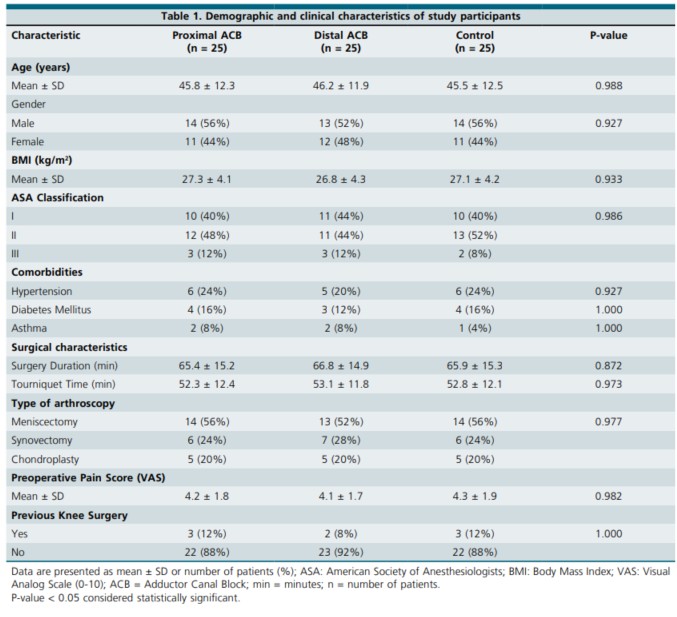
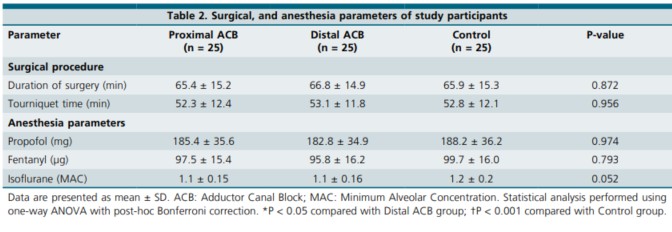
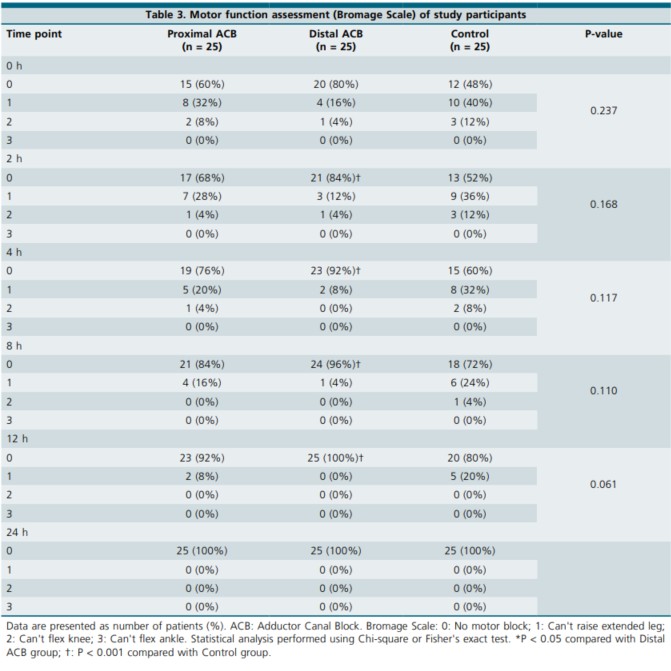
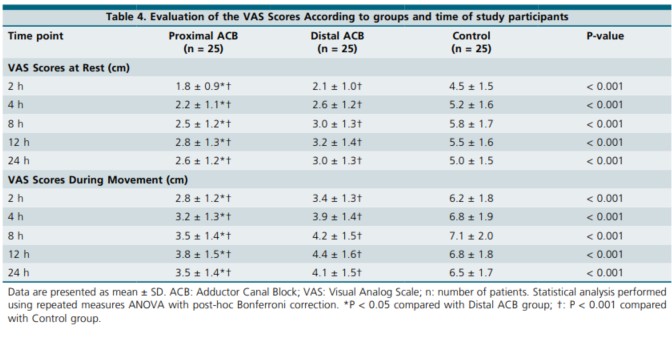
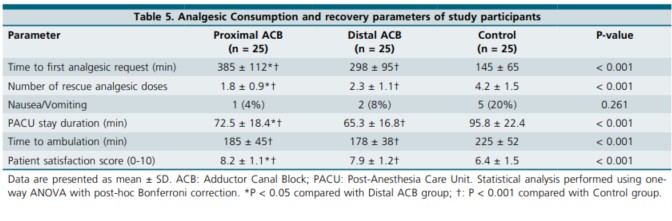
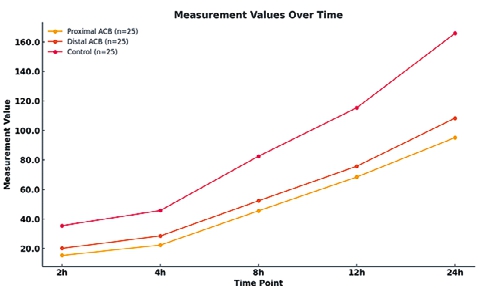
Figure 2. Cumulative tramadol consumption (mg) of study participants.
Discussion
This randomized controlled trial assessed the efficacy of ACB administration at the proximal and distal sites of arthroscopic knee surgery. The results showed that ACB provided significantly better pain relief and reduced opioid use at the proximal compared to the distal site, without compromising muscle strength in the front of the thigh. The results demonstrated that the proximal ACB was a more desirable method for managing pain following knee surgery. Combining pain relief methods is crucial for reducing opioid-related side effects and providing effective pain management with additive or synergistic effects[9]. Nerve blocks, including ACB, have become widely accepted due to their capacity to improve pain relief during surgery while reducing the amount of opioids needed. Traditionally, femoral nerve block and femoral triangle block were widely employed for knee operations; nonetheless, these methods have largely been discontinued due to their link with extended hospital stays and heightened fall risk resulting from motor weakness[10],[11]. Distal methods, such as ACB, have come to the forefront as an alternative for blocking peripheral nerves and providing effective analgesia while maintaining motor power[12]-[14].
Previous research have shown distal nerve blocks’ benefits. Saphenous nerve blocks reduce VAS pain at rest and during physical activity and opioid use in the first 24 hours after surgery compared to placebo[15],[16]. The objective of our study was to evaluate and compare the pain-relieving effectiveness and treatment results of ACB administered at various injection locations (the proximal and distal sites).Several studies have compared the proximal and distal ACB, but relatively few have compared with control group, within the same research trial. A recent study by Tamam et al. 2023[6], reported comparatively to midand distal ACB groups, proximal ACB considerably lowered opioid intake and VAS scores (P = .001 and P =.004). Emphasizing the higher efficacy of proximal ACB. A meta-analysis consisting of 348 patients, as reported by Zhang et al. in 2020[17], revealed no notable discrepancies in total opioid consumption, average VAS pain scores, or block success rates between proximal and distal ACB.
As well as, Fei et al. (2020)[18], reported that proximal ACB led to considerably lower opioid intake compared to mid-ACB when a catheter was inserted at both proximal and middle sites. Our study results were consistent with previous findings; it showed that proximal ACB resulted in better pain relief and lower tramadol usage than the midand distal ACB groups after knee arthroscopy. Abdallah et al.[19], conducted a randomized study in 2021 to compare the effectiveness of three different locations for the administration of analgesic catheter blocks. They found that the location closest to the pain site offered the most significant benefits in terms of reduced opioid use and lower pain scores over a 24-hour period.
Distal ACB
The advantages of the proximal ACB are attributed to its capacity to target extra sensory nerves, such as the saphenous nerve, the superomedial genicular nerves, and the posteromedial branch of the nerve to vastus medialis, with the femoral nerve’s motor branches being left intact[20]. Our study found that the incidence of postoperative nausea was greater in the control group, possibly because of elevated tramadol consumption. This finding supports Tamam et al. (2023)[6], who found a direct correlation between reduced opioid consumption and a lower incidence of postoperative nausea and vomiting. The results of this study are consistent with previous research by Fei et al. (2020)[18], which found a correlation between higher opioid use and increased rates of nausea
Regional block techniques, including ACBs, are crucial for minimizing opioid needs, as evidenced by the enhanced results observed in this study. Another important result was preservation of motor function; distal ACB showed early postoperative period greater motor function retention. Comparatively to 60% in the proximal ACB group and 48% in the control group, at 0h 80% of patients in the distal ACB group had no motor block (Bromage 0). This result is in line with those of Elkassabany et al. (2022) [21], who found better motor preservation with distal ACB. By 24 h, however, all groups showed complete motor recovery, therefore supporting the motor-sparing character of ACB. This study’s application of the Bromage scale conforms with earlier studies evaluating motor inhibition efficiency. Consistent with other studies, this result emphasizes the motor-sparing advantage of ACBs[22],[23].
Conclusions
In conclusion, while both ACB techniques represent effective alternatives to standard care for post-arthroscopic knee pain management, the choice between proximal and distal approaches should be individualized based on specific patient factors and surgical priorities. Further research exploring longterm outcomes and potential refinements to these techniques may help optimize their clinical application.
Referencias
1. Steinwachs M, Cavalcanti N, Reddy SMV, Werner C, Tschopp D, Choudur HN. Arthroscopic and open treatment of cartilage lesions with BST-CARGEL scaffold and microfracture: a cohort study of consecutive patients. The Knee. 2019;26(1):174-84. https://doi.org/10.1016/j.knee.2018.11.015 PMID: https://pubmed.ncbi.nlm.nih.gov/30579660.
2. Steinwachs MR, Waibl B, Mumme M. Arthroscopic treatment of cartilage lesions with microfracture and BST-CarGel. Arthroscopy techniques. 2014;3(3):e399-e402. https://doi.org/10.1016/j. eats.2014.02.011 PMID: https://pubmed.ncbi.nlm.nih.gov/25126511.
3. Li D, Tan Z, Kang P, Shen B, Pei F. Effects of multi-site infiltration analgesia on pain management and early rehabilitation compared with femoral nerve or adductor canal block for patients undergoing total knee arthroplasty: a prospective randomized controlled trial. International orthopaedics. 2017;41:75-83. https://doi.org/10.1007/ s00264-016-3278-0 PMID: https://pubmed.ncbi.nlm.nih.gov/27557955.
4. Kopitkó C, Czermann R, Orosz M, Hangody G, Kiss D, Szabó Z, et al. A randomized comparative evaluation of local infiltration analgesia, extended nerve blocks, and conventional analgesia in pain management after total knee arthroplasty. Joint diseases and related surgery. 2021;32(2):290. https://doi.org/10.52312/jdrs.2021.68 PMID: https://pubmed.ncbi.nlm.nih.gov/34145803.
5. Abdallah FW, Mejia J, Prasad GA, Moga R, Chahal J, Theodoropulos J, et al. Opioid-and motor-sparing with proximal, mid-, and distal locations for adductor canal block in anterior cruciate ligament reconstruction: a randomized clinical trial. Anesthesiology. 2019;131(3):619-29. https://doi.org/10.1097/aln.0000000000002817 PMID: https://pubmed.ncbi.nlm.nih.gov/31246607.
6. Tamam A, Köse SG, Köse HC, Akkaya ÖT. Comparison of the Effectiveness of Ultrasound-Guided Proximal, Mid, or Distal Adductor Canal Block after Knee Arthroscopy. Turkish Journal of Anaesthesiology and Reanimation. 2023;51(2):135. https://doi.org/10.5152/tjar.2023.22225 PMID: https://pubmed.ncbi.nlm.nih.gov/37140579.
7. Sveom DS, Horberg JV, Allen DA, Mann III JW, Moskal JT. Ultrasound-guided adductor canal block versus intraoperative transarticular saphenous nerve block: a retrospective analysis. The Journal of Arthroplasty. 2022;37(6):S134-S8. https://doi.org/10.1016/j.arth.2021.11.033 PMID: https://pubmed.ncbi.nlm.nih.gov/35190244.
8. Vora MU, Nicholas TA, Kassel CA, Grant SA. Adductor canal block for knee surgical procedures. Journal of Clinical Anesthesia. 2016;35:295-303.
9. Baez C, Prieto HA, Tishad A, Vasilopoulos T, Miley EN, Deen JT, et al. Local Infiltration Analgesia Is Superior to Regional Nerve Blocks for Total Hip Arthroplasty: Less Falls, Better Mobility, and Same-Day Discharge. J Clin Med. 2024;13(16). https://doi.org/10.3390/jcm13164645 PMID: https://pubmed.ncbi.nlm.nih.gov/39200787.
10. Kendir S, Torun B, Akkaya T, Comert A, Tuccar E, Tekdemir I. Re-defining the anatomical structures for blocking the nerves in adductor canal and sciatic nerve through the same injection site: an anatomical study. Surgical and radiologic anatomy : SRA. 2018;40(11):1267-74. https://doi.org/10.1007/s00276-018-2094-1 PMID: https://pubmed.ncbi.nlm.nih.gov/30167824.
11. Singh A. Ultrasound Guided Adductor Canal Block Versus Periop Infiltration Regimen, in Total Knee Arthroplasty Patients on Postoperative Pain and Mobilisation: Rajiv Gandhi University of Health Sciences (India); 2018. https://doi.org/10.7759/cureus.57408 PMID: https://pubmed.ncbi.nlm.nih.gov/38694679.
12. Kwofie MK, Shastri UD, Gadsden JC, Sinha SK, Abrams JH, Xu D, et al. The effects of ultrasound-guided adductor canal block versus femoral nerve block on quadriceps strength and fall risk: a blinded, randomized trial of volunteers. Regional anesthesia and pain medicine. 2013;38(4):321-5.
13. Abdallah FW, Whelan DB, Chan VW, Prasad GA, Endersby RV, Theodoropolous J, et al. Adductor Canal Block Provides Noninferior Analgesia and Superior Quadriceps Strength Compared with Femoral Nerve Block in Anterior Cruciate Ligament Reconstruction. Anesthesiology. 2016;124(5):1053-64. https://doi.org/10.1097/aln.0000000000001045 PMID: https://pubmed.ncbi.nlm.nih.gov/26938989.
14. Memtsoudis SG, Yoo D, Stundner O, Danninger T, Ma Y, Poultsides L, et al. Subsartorial adductor canal vs femoral nerve block for analgesia after total knee replacement. Int Orthop. 2015;39(4):673-80. https://doi.org/10.1007/s00264-014-2527-3 PMID: https://pubmed.ncbi.nlm.nih.gov/25297681.
15. Yu R, Wang H, Zhuo Y, Liu D, Wu C, Zhang Y. Continuous adductor canal block provides better performance after total knee arthroplasty compared with the single-shot adductor canal block?: An updated meta-analysis of randomized controlled trials. Medicine (Baltimore). 2020;99(43):e22762.
16. Sun C, Zhang X, Song F, Zhao Z, Du R, Wu S, et al. Is continuous catheter adductor canal block better than single-shot canal adductor canal block in primary total knee arthroplasty?: A GRADE analysis of the evidence through a systematic review and meta-analysis. Medicine (Baltimore). 2020;99(20):e20320.
17. Zhang LK, Chen C, Du WB, Zhou HT, Quan RF, Liu JS. Is the proximal adductor canal block a better choice than the distal adductor canal block for primary total knee arthroplasty?: A meta-analysis of randomized controlled trials. Medicine (Baltimore). 2020;99(43):e22667.
18. Fei Y, Cui X, Chen S, Peng H, Feng B, Qian W, et al. Continuous block at the proximal end of the adductor canal provides better analgesia compared to that at the middle of the canal after total knee arthroplasty: a randomized, double-blind, controlled trial. BMC Anesthesiol. 2020;20(1):260. https://doi.org/10.1186/s12871-02001165-w PMID: https://pubmed.ncbi.nlm.nih.gov/33036554.
19. Abdallah FW, Mejia J, Prasad GA, Moga R, Chahal J, Theodoropulos J, et al. Opioidand Motor-sparing with Proximal, Mid-, and Distal Locations for Adductor Canal Block in Anterior Cruciate Ligament Reconstruction: A Randomized Clinical Trial. Anesthesiology. 2019;131(3):619-29. https://doi.org/10.1097/aln.0000000000002817 PMID: https://pubmed.ncbi.nlm.nih.gov/31246607.
20. Tran J, Chan VWS, Peng PWH, Agur AMR. Evaluation of the proximal adductor canal block injectate spread: a cadaveric study. Regional anesthesia and pain medicine. 2019. https://doi.org/10.1136/rapm-2018-100355 PMID: https://pubmed.ncbi.nlm.nih.gov/31061110.
21. Elkassabany NM, Antosh S, Ahmed M, Nelson C, Israelite C, Badiola I, et al. The Risk of Falls After Total Knee Arthroplasty with the Use of a Femoral Nerve Block Versus an Adductor Canal Block: A Double-Blinded Randomized Controlled Study. Anesthesia and analgesia. 2016;122(5):1696-703. https://doi.org/10.1213/ane.0000000000001237. PMID: https://pubmed.ncbi.nlm.nih.gov/27007076.
22. Craig D, Carli F. Bromage motor blockade score a score that has lasted more than a lifetime. Can J Anaesth. 2018;65(7):837-8.
23. Jenstrup MT, Jæger P, Lund J, Fomsgaard JS, Bache S, Mathiesen O, et al. Effects of adductor-canal-blockade on pain and ambulation after total knee arthroplasty: a randomized study. Acta Anaesthesiol Scand. 2012;56(3):357-64.